Every March, the electronic music industry compresses itself into a single city.

Schedules overlap.
Conversations blur together.
Days turn into nights, and nights turn into early morning panels.
For a week, the global dance music business runs in real time.
Artists, managers, labels, media, and platforms all converge in the same place, moving between venues, meetings, and events in a constant search for connection and opportunity.
It’s considered one of the most important weeks of the year for the industry.
But it also raises a question that feels increasingly hard to ignore:
Is today’s music conference format evolving as quickly as the industry itself?
A Format That Still Looks Familiar
For decades, music conferences have followed a relatively consistent structure.
Panels featuring industry professionals.
Networking sessions and informal meetups.
Brand activations and sponsored events.
And to be clear, these elements still provide value.
Panels create access to perspectives that might otherwise be difficult to hear.
Networking remains one of the most important drivers of opportunity in the music business.
Events bring the community together in a way that digital platforms can’t fully replicate.
But for many conference attendees, the experience can start to feel a bit too familiar year after year.
Similar topics.
Similar formats.
Similar surface-level conversations.
Not because the people involved lack insight — but because the structure itself hasn’t changed much.
An Industry Moving Faster Than Its Infrastructure
The music business has undergone a massive transformation over the past decade.
Artists are building direct relationships with their audiences.
Data is shaping decisions in real time.
Marketing strategies evolve platform by platform, often week by week.
Not to mention, artificial intelligence (AI) is completely disrupting the music industry.
Entire careers are now being built outside of traditional systems — or in parallel with them.
And yet, the environments where the industry gathers to exchange ideas often rely on formats designed for a different era.
Primarily passive.
Primarily top-down.
Primarily discussion-based.
Which creates a disconnect between how the industry operates — and how it talks about itself.
When Access Becomes a Trade-Off
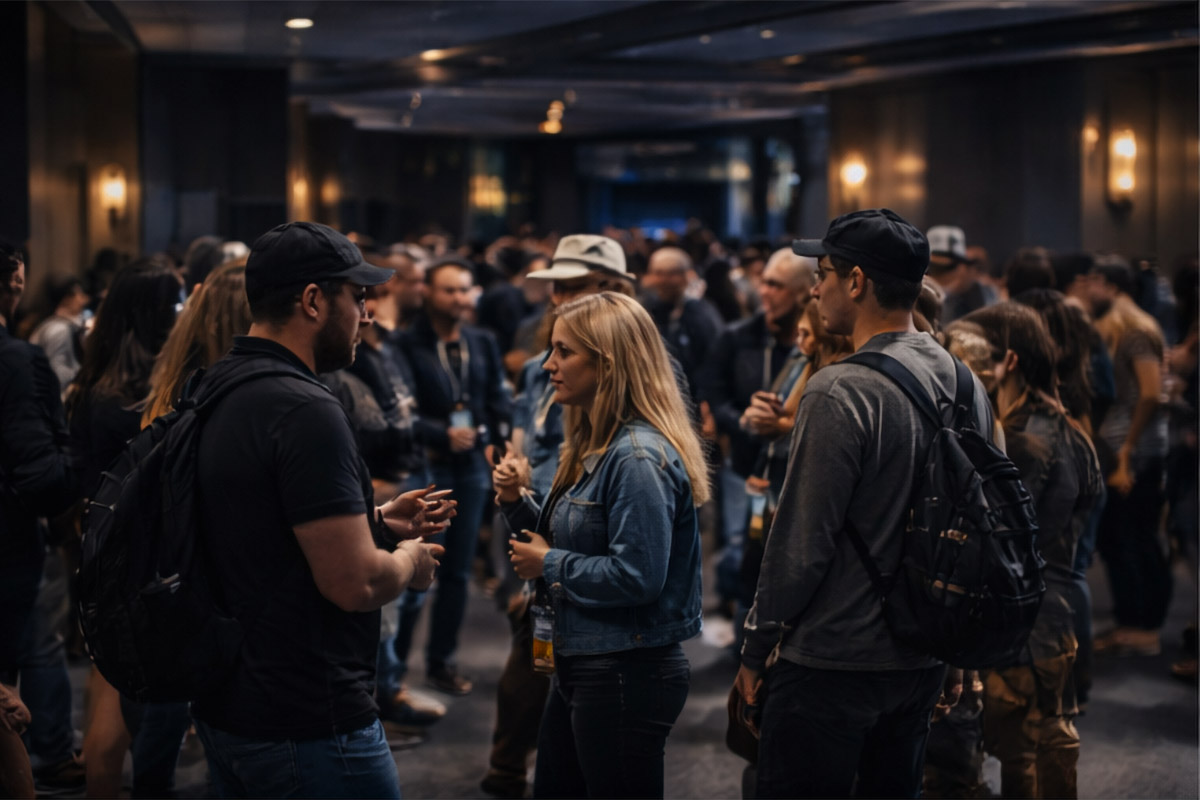
As the ecosystem has grown, so has the number of events occurring simultaneously.
Multiple conferences.
Multiple venues.
Multiple overlapping schedules.
For attendees, this often turns access into a series of trade-offs.
Choosing one session means missing another.
A conversation across the city might come at the cost of a panel nearby.
Opportunities exist everywhere — but not all at once.
This year, that dynamic was amplified by geography.
With key events spread across different parts of the city, simply moving between them became part of the experience. What should feel like a centralized industry hub instead became a series of decisions about where to be — and what to miss.
At scale, even small logistical friction points can shape how the entire week feels.
The Reality of Scale
Large industry gatherings are complex.
They bring together thousands of people, multiple stakeholders, and layers of programming — often within tight timeframes.
And when new events enter the ecosystem, or existing ones evolve, there are naturally moments where logistics are tested.
Schedules shift.
Plans adjust.
Attendees adapt in real time.
None of this is unusual. In many ways, it’s part of the process of growth.
But it also highlights something deeper:
The current format is being pushed to its limits.
Beyond Panels and Talking Points
The biggest opportunity for evolution may not be in what is discussed — but in how it’s delivered.
Because in an industry now driven by execution, transparency, and real-time strategy, there’s growing demand for something more than conversation.
More doing.
More clarity.
More depth.
What might that look like?
Sessions that break down real campaigns rather than speak in generalities.
Workshops that walk through actual strategy decisions in real time.
Transparent discussions around budgets, marketing spend, and outcomes.
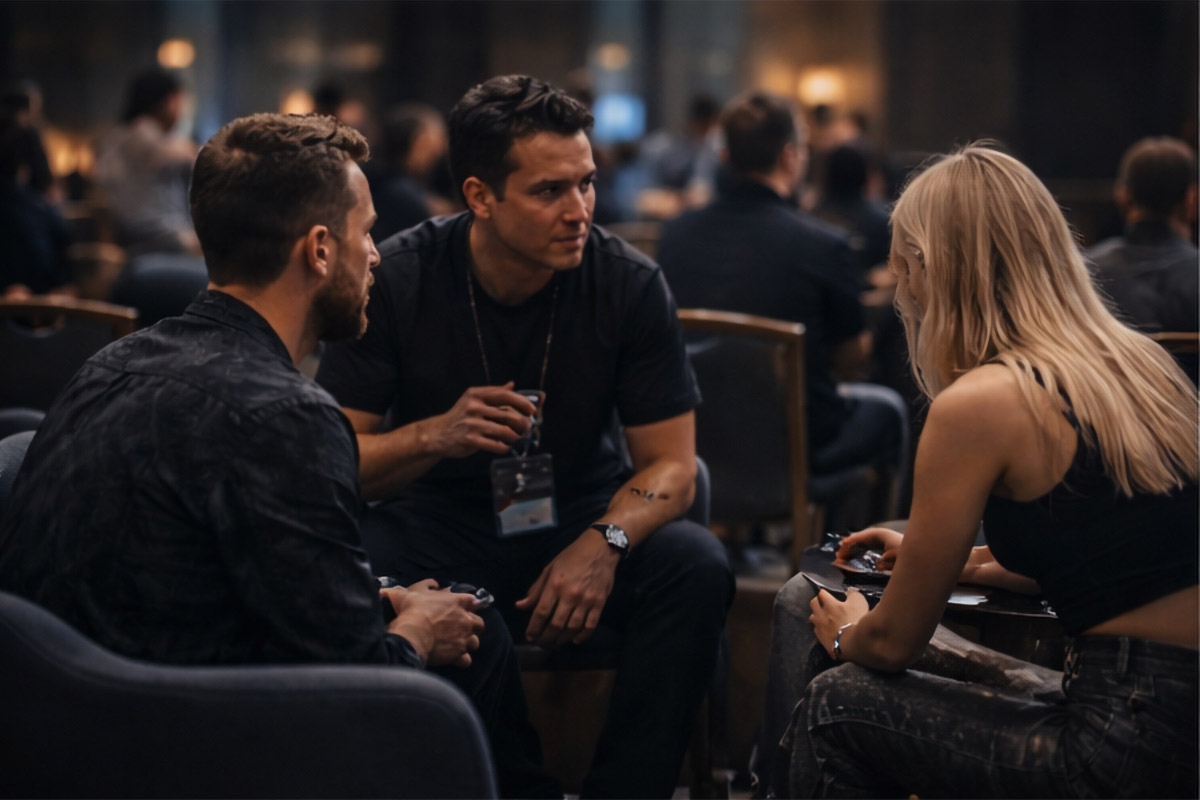
Smaller, more focused environments designed for interaction, not observation.
Not necessarily bigger events.
But more intentional ones.
Flipping the Conversation
Most conference panels follow a familiar structure.
Industry professionals and established artists sit on stage, sharing insights with an audience largely made up of emerging talent.
There’s value in that.
But it also raises an interesting question:
What happens when the conversation flows in the opposite direction?
What if, instead of speaking to artists, the industry spent more time listening to them?
Emerging artists are navigating the realities of today’s music landscape in real time.
They are testing strategies, building audiences, and encountering friction points that don’t always surface in traditional discussions.
Creating space for those voices — not just in Q&A segments, but as the primary perspective — could unlock a different kind of insight.
Because in a rapidly evolving industry, those closest to the ground often see the changes first.
Rethinking the Experience
It’s possible that the next evolution of music conferences isn’t about scale at all.
It may be about precision.
Smaller sessions with clearer objectives.
Hybrid formats that extend beyond physical locations.
Experiences designed around participation, not just attendance.
As the industry becomes more decentralized, the way it gathers may need to follow a similar path.
Less centralized.
More adaptable.
More aligned with how careers are actually built today.
A Different Approach
At EDM Sessions, we’ve spent years reviewing real-world artist submissions and observing how music actually moves through the ecosystem — from release to audience.
That perspective reveals something simple:
The gap between theory and execution is where most artists struggle.
Which raises an interesting idea.
If we were to design a conference — or even a single session within one — it likely wouldn’t center solely on panels.
It would focus on:
- Real campaigns
- Real numbers
- Real decisions
- Real outcomes
Because that’s where the value lives.
The Next Phase
Music conferences still matter.
They bring the industry together.
They create opportunity.
They build community.
But like everything else in the music industry, they are part of a system that is constantly evolving.
And as the industry continues to move forward, the question isn’t whether these events will continue.
It’s how they will adapt.
Because the next generation of music conferences may not be defined by how many people they attract—
But by how much value they actually deliver.
Please share and rate this article if it resonated with you