In today’s music industry, almost anyone can upload a mix.
What’s far less common is understanding how to create a radio show that functions reliably within a professional broadcast ecosystem.
Because once a show moves beyond SoundCloud links and social uploads—and into actual station rotation—it stops being just content.
It becomes a broadcast product.
And that distinction matters.
Behind every professionally syndicated radio show is an operational framework that most listeners never see: exact runtimes, metadata standards, audio normalization, delivery schedules, automation compatibility, and consistent communication between artists, syndicators, and stations.
When those details are handled properly, the process becomes seamless.
When they aren’t, the entire system starts to break down.
The Difference Between a DJ Mix and a Broadcast Product
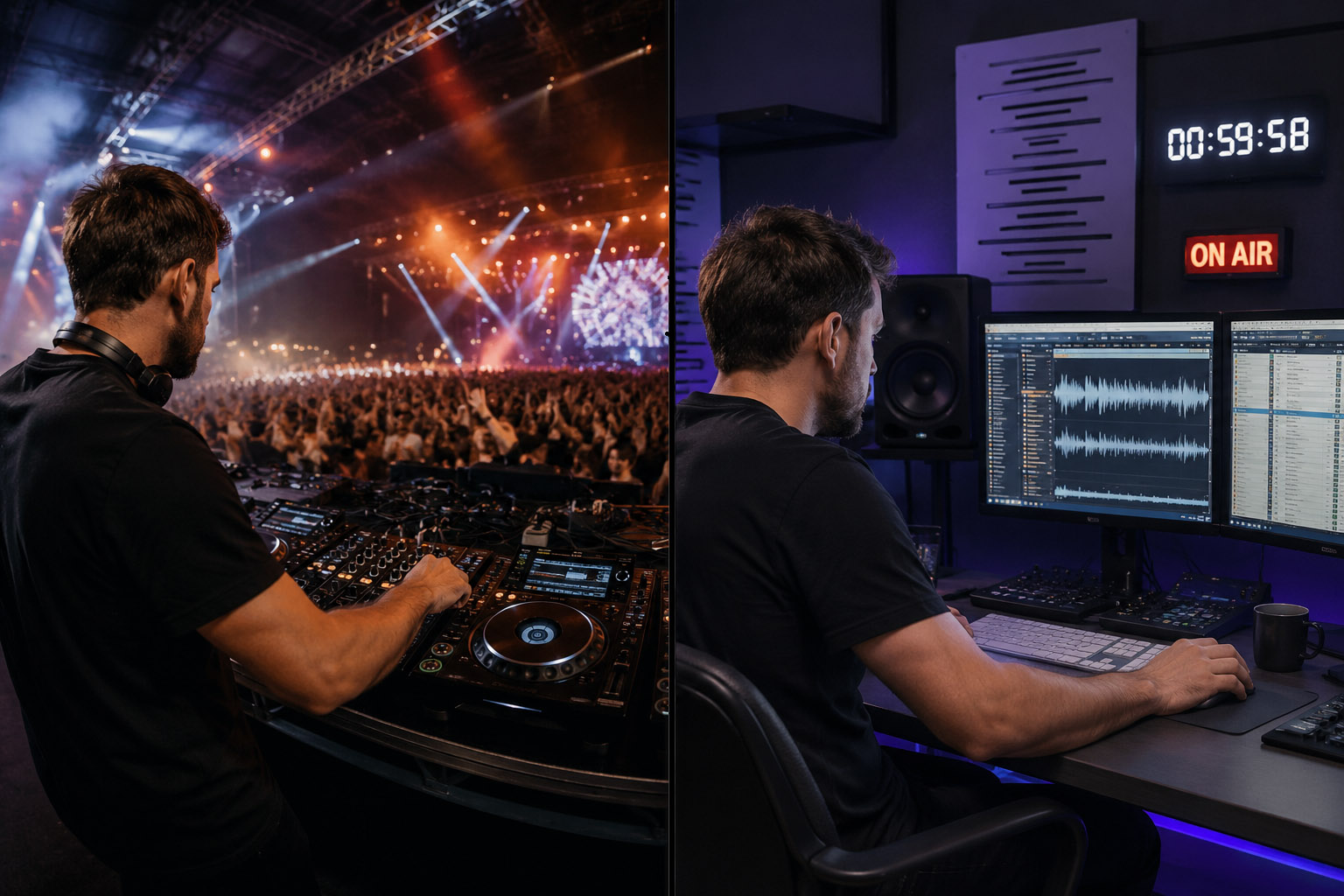
A great track selection alone does not make a professional radio show.
Programming matters.
Flow matters.
Identity matters.
But operational consistency matters too.
Stations build schedules around fixed clocks and automation systems. Episodes are often syndicated across multiple time zones, platforms, and broadcasting environments simultaneously. What may feel like a minor oversight on the production side can quickly become a technical or scheduling problem downstream.
This is why professional radio broadcasting has always relied on standards.
Not to limit creativity—but to ensure reliability.
Precision Is Part of the Product
One of the most common problems in syndicated radio is inconsistent episode length.
A show scheduled for one hour should be one hour.
Not 58:17.
Not 1:03:42.
Not “close enough.”
Broadcast schedules operate with precision, especially in automated environments where multiple programs, IDs, commercial blocks, or station imaging elements are chained together.
Even small timing inconsistencies can create operational friction:
- overlapping automation events
- dead air
- abrupt transitions
- truncated station elements
- manual intervention by station staff
Professional producers understand that runtime discipline is not optional—it’s part of the deliverable.
Metadata Is Infrastructure
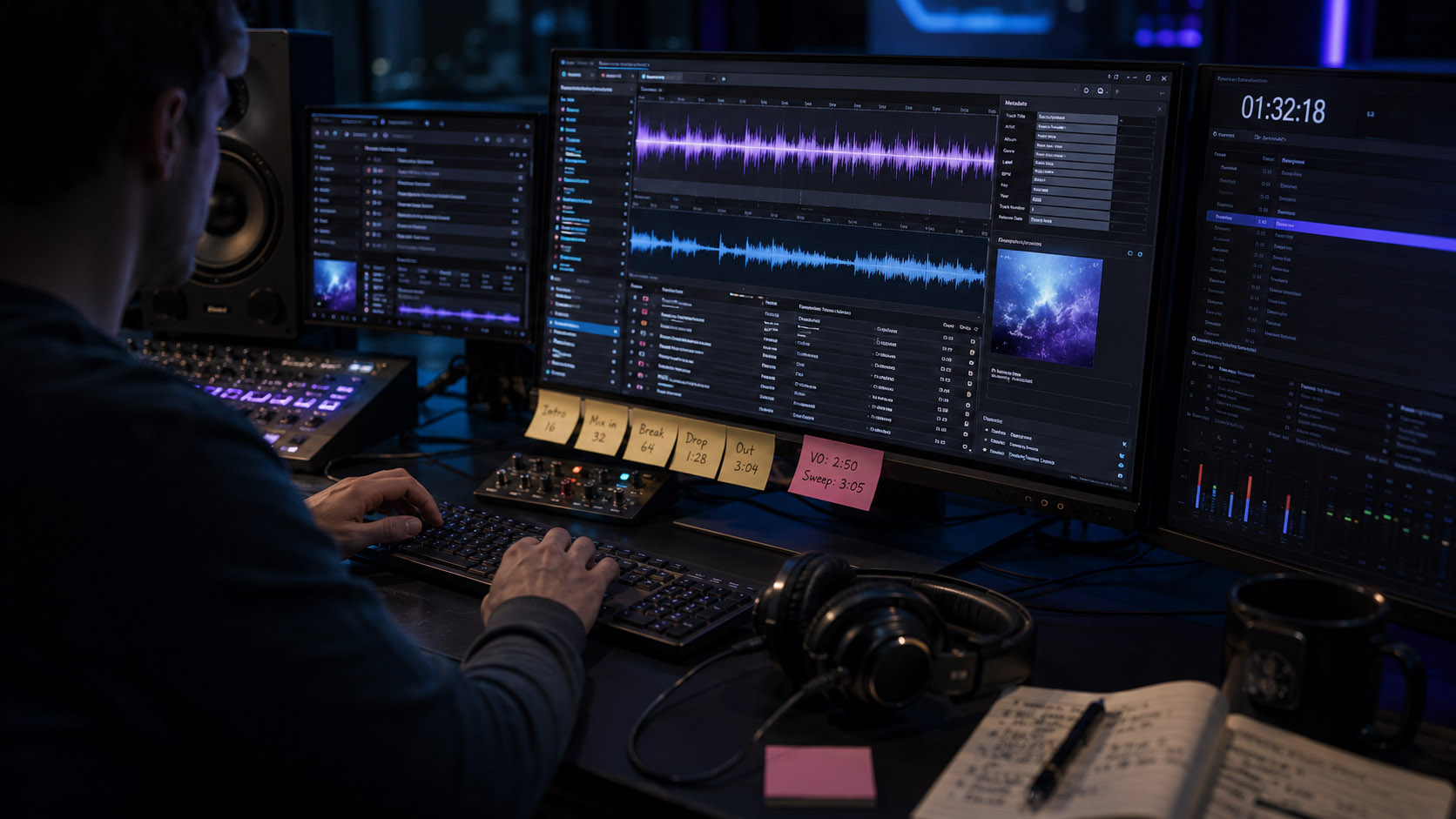
Metadata is often treated as an afterthought.
In reality, it is part of the infrastructure that allows modern radio systems to function properly.
Correctly formatted ID3 tags help stations:
- identify episodes
- automate playback systems
- organize archives
- display accurate now-playing information
- manage syndication workflows
At minimum, syndicated shows should consistently include:
- show title
- episode number
- episode title (if applicable)
- artist/DJ name
- year
- genre
- artwork
Consistent file naming conventions matter too.
Sending files named:
- “finalmixNEW.mp3”
- “showmasterv2FINAL.mp3”
- “radioeditREALfinal.mp3”
only creates unnecessary confusion.
Professional delivery systems depend on clarity and consistency.
Audio Quality Still Matters
Listeners may not always identify technical problems consciously—but they feel them immediately.
Distorted masters.
Clipping.
Inconsistent loudness.
Harsh limiting.
Low bitrate exports.
Abrupt volume jumps between tracks.
These issues impact perceived professionalism whether the audience realizes why or not.
A professionally syndicated show should maintain:
- clean mastering
- stable loudness levels
- consistent stereo imaging
- reliable export settings
- high-quality encoding
Because in broadcast environments, audio inconsistencies become amplified.
What sounds acceptable in headphones during production may sound far different once transmitted through radio processing chains, mobile apps, smart speakers, automotive systems, or rebroadcast networks.
Delivery Reliability Is Part of the Brand
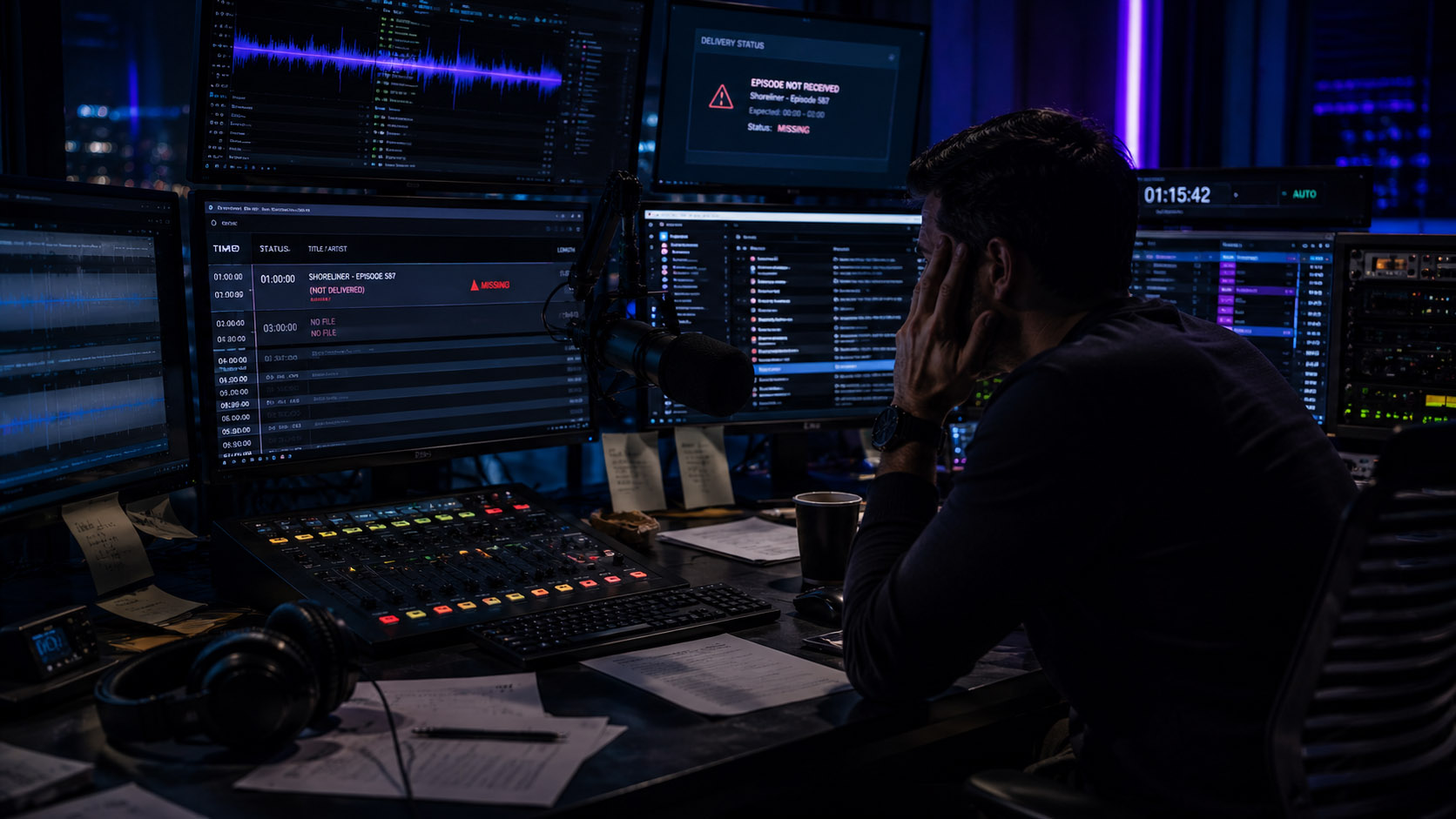
One of the least discussed—but most important—aspects of radio syndication is delivery consistency.
Stations build schedules weeks in advance. Programming grids depend on content arriving on time and in the expected format.
Yet missed deliveries remain surprisingly common across the industry.
Episodes arrive late.
Links expire.
Files are replaced unexpectedly.
Uploads fail silently.
Schedules drift.
And when a new episode fails to appear, the burden almost always falls on the station to investigate what happened.
Instead of proactive communication, stations are often left sending emails like:
“Did this week’s episode upload?”
Only then does the explanation arrive:
- “The producer didn’t deliver it yet.”
- “We’re chasing it now.”
- “They’re traveling this week.”
- “Please rerun a previous episode.”
In many cases, the real frustration is not the missed episode itself.
It’s the lack of communication.
Syndication Companies Are Critical Infrastructure
Syndication companies play an essential role in modern electronic music broadcasting.
They connect artists and stations globally.
They simplify distribution.
They create consistency across networks that would otherwise be difficult to coordinate.
But as the ecosystem evolves, there is an opportunity for syndication standards to evolve alongside it.
A professional syndication platform should not simply distribute files.
It should actively help maintain broadcast integrity.
That may include:
- delivery deadline monitoring
- automated upload validation
- runtime verification
- metadata enforcement
- loudness checks
- communication alerts for missed episodes
- proactive station notifications when schedules change
Because once a show is syndicated at scale, reliability becomes part of the listener experience.
And operational transparency builds trust across the entire network.
Communication Is Part of Professionalism
One of the easiest ways to improve syndication relationships requires no new technology at all:
Simply communicate earlier.
If an episode will be delayed, stations should know before they have to ask.
If a producer is unavailable, communicate it proactively.
If a rerun is required, notify affiliates in advance.
If technical issues occur, acknowledge them clearly and quickly.
Most stations understand that occasional disruptions happen.
What creates frustration is silence.
Professional broadcasting depends on predictability, and communication is one of the simplest ways to preserve it.
The Listener Hears the Result
Most listeners will never think about:
- metadata
- runtimes
- delivery systems
- syndication infrastructure
Nor should they.
The audience should only experience the final result:
a seamless show that sounds polished, intentional, and reliable every single week.
That consistency builds trust.
Not only between stations and syndicators—but between artists and audiences.
Because over time, professionalism becomes part of the brand itself.
Raising the Standard
Electronic music radio has evolved dramatically over the past two decades.
What was once informal and fragmented has become increasingly global, connected, and professionalized.
But with that growth comes greater responsibility for everyone involved:
- artists
- producers
- syndicators
- broadcasters
Creating a great radio show today requires more than musical taste alone.
It requires operational discipline.
Because in modern broadcasting, reliability is not separate from the art form—
It’s part of it.
Please share and rate this article if it resonated with you