



Listeners:
Top listeners:
00:00
00:00
volume_up
chevron_left
-
play_arrow
EDM Sessions Radio
-
 play_arrow
London Calling Podcast Yana Bolder
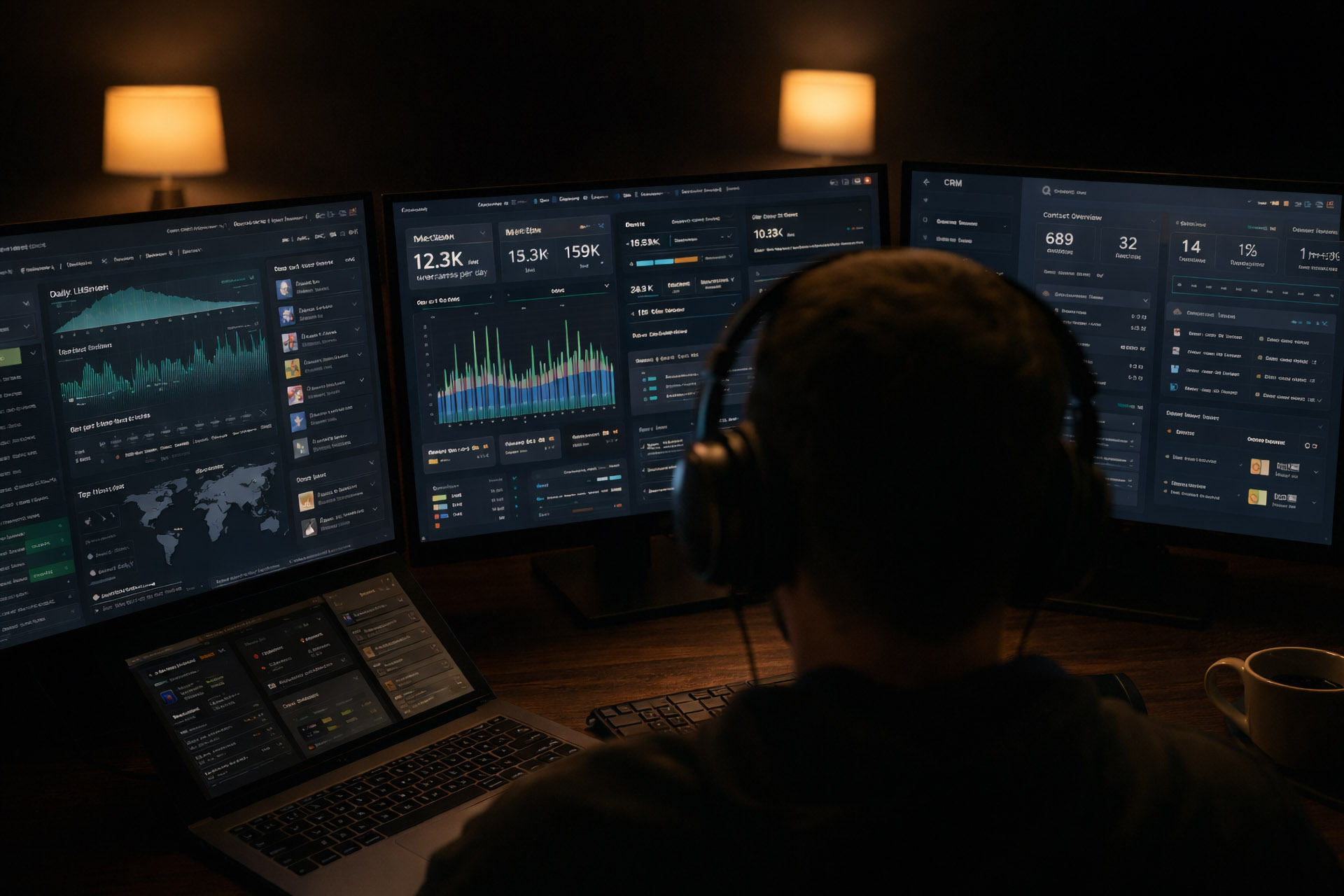
The modern EDM artist has access to more tools than ever—distribution platforms, analytics dashboards, promo services, content apps, and data subscriptions all promising growth. But more tools don’t equal better results. In reality, most artists are over-tooled and under-focused, mistaking activity for progress. This article is a clear-eyed look at what actually belongs in a modern EDM stack—and what’s quietly draining time, money, and momentum.
The Tool Overload Problem

At some point, the tools became the plan.
What started as a handful of platforms designed to help artists release music has exploded into an entire ecosystem of dashboards, subscriptions, automation layers, and “growth hacks.” On paper, it looks empowering. In practice, it’s overwhelming.
Artists today are told they need:
- Multiple analytics platforms
- Paid promo services
- Playlist pitching tools
- Content schedulers
- Fan engagement software
- AI assistants
- CRM systems
All before the music has even had time to breathe.
The result isn’t momentum—it’s noise.
Tool overload creates a dangerous illusion of productivity. You’re busy. You’re logging in. You’re checking stats. But none of it guarantees that listeners are actually connecting, that fans are forming, or that a career is moving forward.
Worse, too many tools fragment focus. Instead of making better music or building stronger relationships, artists spend their energy managing platforms—each one demanding attention, each one offering a different version of “success.”
This endless cycle is how artists end up exhausted without ever feeling established.
The truth is uncomfortable but freeing:
Most artists don’t have a tooling problem. They have a clarity problem.
And until that’s addressed, no stack—no matter how modern—will fix it.
The Only Question That Matters: What Is This Tool For?
Before adding another platform, subscription, or service to your stack, there’s one question every artist should be able to answer immediately:
What is this tool actually for?
Not what it promises.
Not what other artists are using it for.
Not what the sales page implies.
What role does it play in your career—right now?
If a tool doesn’t clearly support one of the four functions below, it probably doesn’t belong in your stack.
Create
Does this tool help you make better music—or make music more consistently?
Creation tools should reduce friction, not introduce complexity. Whether it’s production software, collaboration workflows, or inspiration capture, anything in this category should directly support the act of creating.
If a tool pulls you out of the creative zone more than it puts you into it, it’s not helping—no matter how powerful it claims to be.
Release
Does this tool help your music reach the world cleanly and reliably?
Release tools handle the unglamorous but essential work: distribution, versioning, metadata, delivery, and payouts. Their job isn’t to create buzz—it’s to remove obstacles.
This part of the stack should feel boring. Stable. Invisible.
If you’re constantly thinking about your release tools, something’s off.
Connect
Does this tool help you build genuine connections—with listeners, tastemakers, or partners?
Connection tools are where careers actually grow. This includes outreach, communication, community touchpoints, and relationship-building—not mass blasts or automated noise.
The key question here isn’t scale—it’s relevance.
A tool that helps you reach 50 right people is more valuable than one that shouts at 5,000 strangers.
Sustain
Does this tool help you understand what’s working well enough to make better decisions next time?
Sustainability tools provide perspective. They help you spot patterns, avoid burnout, and refine direction over time. Used correctly, they support long-term momentum.
Used obsessively, they create anxiety.
If a tool makes you feel reactive instead of informed, it’s undermining the very thing it claims to support.
The Filter That Changes Everything
Here’s the litmus test:
If you can’t explain which of these four roles a tool plays—and how it earns its place—you don’t need it yet.
The modern EDM stack isn’t about having more tools.
It’s about having fewer tools that do exactly what you need them to do.
The Core EDM Stack (What You Actually Need)

Strip away the noise, and most EDM artists—regardless of genre or career stage—need surprisingly few tools to operate effectively.
The mistake isn’t not having enough.
It’s having too much of the wrong stuff.
Here’s what actually belongs in a modern EDM stack, using the framework we just established.
1. Distribution: Non-Negotiable, Keep It Simple
Distribution is infrastructure. Nothing more.
Its job is to:
- Get your music where it needs to go
- Pay you accurately
- Stay out of the way
That’s it.
Too many artists treat distributors like growth partners, constantly switching platforms in search of better playlist placement or algorithmic luck. That rarely works. Distribution doesn’t create demand—it only delivers supply.
Once you’ve chosen a reliable distributor with clear payouts and transparent reporting, stop touching it. Stability here frees your attention for things that actually move careers forward.
If your distributor feels exciting, you’re probably expecting it to do the wrong job.
2. Analytics: Use Sparingly, Not Obsessively
Analytics should answer questions—not generate anxiety.
At most, artists need tools that help them understand:
- Where listeners are coming from
- What tracks are holding attention
- Which cities or regions are quietly forming clusters
That’s enough.
Daily stat-checking doesn’t improve outcomes—it just trains you to react emotionally to short-term fluctuations. Good analytics usage looks like this:
- Periodic check-ins
- Pattern recognition over time
- Decisions informed by trends, not spikes
If a platform gives you more data than you know how to act on, it’s not helping. It’s distracting.
3. Promo & Outreach: Human Beats Automated
No tool replaces thoughtful, human outreach.
Mass email blasters, generic promo services, and automated pitching platforms promise scale—but usually deliver noise. Tastemakers, DJs, radio programmers, and curators can tell immediately when they’re receiving something templated.
Effective promo tools do one thing well:
They help you organize and personalize outreach.
That might mean managing contacts, tracking conversations, or keeping notes on who actually responds. The value isn’t automation—it’s memory and context.
If your promo tool makes everyone feel like “just another email,” it’s working against you.
4. Content & Communication Tools: Reduce Friction, Not Pressure
Content tools should make it easier to show up—not harder.
If a platform turns posting into a chore, creates guilt cycles, or pressures you into trends that don’t fit your voice, it’s the wrong tool. Period.
The best content tools:
- Match your natural workflow
- Support consistency without forcing volume
- Let the music lead, not the format
There’s no prize for being everywhere.
There is value in being coherent.
5. Community Touchpoints: Small, Intentional, Powerful
This is where many artists under-invest.
You don’t need a massive audience to build momentum. You need reachable people—listeners who recognize your name, reply to messages, and show up again and again.
Community tools might include:
- Email lists
- Small chat groups
- Direct fan communication channels
- IRL touchpoints around shows
The mistake is chasing scale before trust.
A community of 100 people who care beats an audience of 10,000 who forget you tomorrow.
The Big Takeaway
The core EDM stack isn’t flashy.
It’s functional. Intentional. Calm.
If your tools are constantly demanding attention, something’s wrong.
The best stacks disappear into the background—and let the music, relationships, and direction take center stage.
Tools You Probably Don’t Need (Yet)
This is the part where a lot of artists feel uncomfortable—and that’s okay.
Because most “unnecessary” tools aren’t bad tools. They’re just premature. And using them too early often creates more friction than forward motion.
Here are some common categories artists rush into before they’re actually helpful.
1. Advanced Data Platforms Without a Decision Plan
Deep analytics tools are powerful—but only if you know what decisions they’re supposed to inform.
If you can’t clearly answer:
- What action will I take based on this data?
- How often will I review it?
- What would make me change course?
…then the tool isn’t helping. It’s just feeding curiosity and anxiety.
Most early- and mid-stage artists don’t need more data. They need interpretation—and that comes from experience, not dashboards.
2. Paid Playlist Pitching Tools With No Context
Paying to submit music to a void rarely builds anything lasting.
Playlist pitching platforms often promise exposure but deliver:
- Little transparency
- No relationship
- No feedback loop
Even when a placement happens, it’s usually disconnected from fans, shows, or long-term engagement.
If you’re not pairing playlist exposure with storytelling, outreach, or follow-up, the value evaporates quickly.
A playlist add isn’t a strategy—it’s a moment. And moments don’t compound on their own.
3. Overbuilt CRM Systems
Customer relationship management tools sound professional—but they’re designed for teams, not solo artists.
If you don’t have:
- A defined outreach process
- Regular communication cadence
- Clear segmentation needs
…a full CRM becomes overhead, not leverage.
Simple systems—spreadsheets, notes, or lightweight contact tools—often work better until volume demands more structure.
4. AI Tools That Replace Your Voice Instead of Amplifying It
AI can be useful. But when it starts speaking for you, something’s off.
Tools that generate captions, emails, or messaging without your involvement often flatten personality. And in music, personality is the product.
If an AI tool helps you organize ideas, outline thoughts, or reduce admin work, great.
If it starts sounding like everyone else, it’s costing you more than it saves.
5. “Growth Hacks” That Skip the Middle
Anything promising shortcuts without foundations should raise eyebrows.
Growth hacks work best when there’s already momentum. Without that, they tend to create spikes without substance—attention without attachment.
If a tool promises scale before connection, it’s probably not aligned with where most artists actually are.
The Reframe That Matters
Not needing a tool yet isn’t failure.
It’s focus.
Most tools become valuable later—when direction is clearer, relationships have formed, and patterns have emerged.
Until then, restraint is a competitive advantage.
The Myth of the “Perfect Stack”
One of the most subtle traps in modern music culture is comparison—not of talent, but of tooling.
Artists see screenshots of dashboards, hear peers name-drop platforms, or read “what I use” threads, and assume success comes with a predefined setup. If you just assemble the same stack, the thinking goes, the results will follow.
They won’t.
There is no universal EDM stack. There is only a contextual one.
What works for a touring artist with a team will be wildly inefficient for a solo producer still building an audience. What helps a label-backed act scale will overwhelm an independent artist still refining their sound.
Stacks should evolve alongside careers—not be copied wholesale from someone at a different stage.
The real danger of chasing the “perfect stack” isn’t wasted money. It’s misplaced attention. Time spent configuring tools is time not spent creating, connecting, or listening—three things no platform can do for you.
And perhaps most importantly, copying another artist’s stack often means copying their priorities. That can quietly pull you away from what actually makes your project distinct.
The most effective artists don’t optimize for efficiency first.
They optimize for clarity.
When you know what you’re trying to build, the right tools become obvious—and the wrong ones fall away on their own.
How to Audit Your Current Stack
You don’t need to burn everything down.
You just need to look at it honestly.
A stack audit isn’t about finding the “best” tools—it’s about finding the right ones for where you are right now.
Set aside an hour. Open a notes app. And ask yourself these questions, tool by tool.
1. What Do I Actually Use—Weekly?
Not what you intend to use.
Not what you pay for.
What do you genuinely open every week?
Anything that hasn’t been touched in 30 days deserves scrutiny. If it’s not actively supporting your work, it’s either unnecessary or mis-timed.
2. What Directly Leads to Momentum?
For each tool, answer this plainly:
- Has this helped me release better music?
- Has this helped me connect with real people?
- Has this helped me make clearer decisions?
If the answer is “I’m not sure,” that’s already an answer.
Tools that don’t lead to action often lead to distraction.
3. What Creates Clarity—and What Creates Anxiety?
Pay attention to how tools make you feel.
Some tools help you step back and see patterns. Others pull you into constant reaction. If a platform leaves you second-guessing every move, it’s working against you—even if the data is accurate.
Clarity compounds. Anxiety fragments.
4. What Can I Pause—Without Consequence?
Here’s the quiet test of necessity:
If you paused this tool for 60 days, what would actually break?
Often, the answer is “nothing.”
Pausing isn’t quitting. It’s creating space to see what truly matters.
5. What’s Missing Isn’t a Tool—It’s Intent
If your audit reveals gaps, resist the urge to fill them immediately with subscriptions.
Sometimes what’s missing isn’t software—it’s:
- A clearer release plan
- A more focused outreach strategy
- A better understanding of your audience
Tools should follow intent, not replace it.
The Point of the Audit
A clean stack doesn’t feel impressive.
It feels quiet.
And in that quiet, momentum has room to grow.
Final Word: Fewer Tools, Better Outcomes
The most effective artists aren’t the most automated.
They’re the most intentional.
Tools should support momentum, not replace it. They should create space for better music, stronger relationships, and clearer decisions—not constant monitoring or noise.
If your stack feels heavy, it’s probably doing too much.
If it feels invisible, it’s probably doing its job.
Strip things back. Build with purpose. Let the tools work quietly in the background—and put your energy where it’s always mattered most.
The music comes first.

